California corbina
Menticirrhus undulatus
The hardest fish to catch from a California beach on purpose, and the most rewarding. Sight fishing in a foot of water, why they spook, and what to use.
By Augustus Muse · Published September 23, 2026
The complete setup
| Part | What to use | Where |
|---|---|---|
| Rod | 8 to 9 ft, lighter than you'd use for perch | Eagle Claw Crafted Glass Spinning Rod — 8', 2-Piece Medium-Heavy |
| Reel | 2500 or 3000 spinning | Abu Garcia Max X 2500 Spinning Reel |
| Line | 20 lb mono, or light braid | Vicious Ultimate Monofilament — 20 lb, Clear, 330 yd |
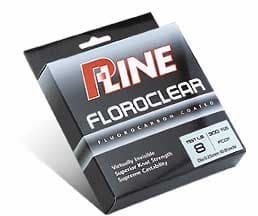
| Leader | 12 lb fluorocarbon, 2 to 4 ft, and go lighter if refused | P-Line Floroclear Fluorocarbon-Coated Line — 12 lb, 330 yd |
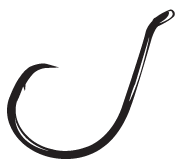
| Hook | Size 4 to 2, small and sharp | Gamakatsu Octopus Circle Hook — 1/0, Black Nickel, 6-Pack |
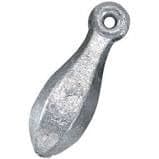
| Weight | As little as holds. 3 oz maximum, often less | MO's Bank Sinkers — 3 oz, 26-Pack |
| Bait | Soft shell sand crab | Dig them yourself from the wash. The soft ones are worth separating out. |
Corbina are the surf fish that experienced beach anglers get obsessive about. They feed in water shallow enough that you can watch them do it, they eat one thing almost exclusively, and they'll refuse a bait for reasons that make no sense until they suddenly don't.
If perch teach you to fish the surf, corbina teach you to hunt.
How do you sight fish for corbina?
You walk and look before you cast. On a calm day with decent light, corbina show themselves in the wash as a dark shape or a tail breaking the surface while they root in the sand.
The technique is to spot a fish, get ahead of where it's moving, and place a bait in its path without landing the sinker on its head. Then you leave it there.
This is the opposite of most surf fishing. You're not covering water, you're waiting for a specific fish to find a specific bait.
What do corbina eat?
Sand crabs, to the point of near obsession. They're built for it, with a mouth angled down for rooting through sand and a single chin barbel for finding what's buried.
A soft shell sand crab, which is one that's recently moulted and feels squashy rather than hard, is the single best bait. They're worth picking out of a scoop and keeping separate.
Some people catch them on ghost shrimp or a small piece of mussel. Almost nobody catches them consistently on anything else.
Why do corbina spook so easily?
Because they're feeding in a foot of clear water with nowhere to hide, and everything above them is a threat.
That means your line, your leader and your shadow all matter more than they do for any other surf fish. Light fluorocarbon, the smallest sinker that will hold, and standing back from the water rather than wading into it.
It also means a heavy splash from a four ounce sinker landing near a fish ends that opportunity. Lighter is better in every part of this rig.
What rig for corbina?
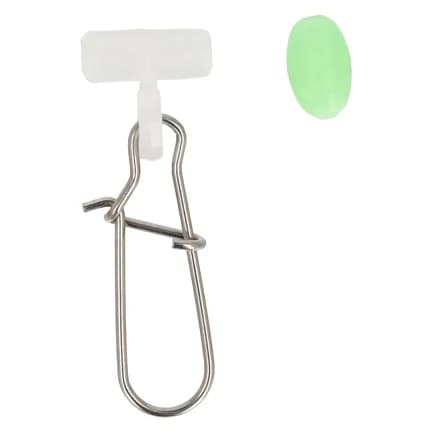
The same fish-finder rig as surfperch, scaled down. Sinker slide, bead, swivel, then a long light fluorocarbon leader of two to four feet and a small hook.
Hook size 4 to 2 is right. Corbina have soft mouths and small ones at that, and a big hook pulls or simply doesn't get taken.
Some anglers fish no weight at all in very shallow calm water, just a hook and a crab, letting the wash carry it. It's a difficult way to fish and it catches fish that a weighted rig won't.
Common questions
- What's the best tide for corbina?
- A pushing tide over a shallow beach, which floods sand that was dry and gets crabs moving. Calm water and good light matter more than the specific tide height, because you need to be able to see fish.
- Can you keep corbina?
- There are bag and size rules, and in California it's illegal to take them by spear or net. Regulations change, so check the current rules for where you fish.
- Why won't corbina take my bait?
- Usually leader or weight. Drop your leader test, lengthen it, and use the lightest sinker that will stay put. After that, check your crab is fresh and hooked so it looks natural.