How to Catch Sand Crabs for Bait
Sand crabs are the best surfperch bait on the West Coast and they're free, sitting in the sand at your feet. Here's how to find them, which ones to keep, and how to hook them.
By Augustus Muse · Published August 25, 2026
If you're fishing the California surf for perch and buying bait, you're doing it the hard way. The thing perch eat most is a sand crab, also called a mole crab, and there are thousands of them in the swash at your feet.
They're free, they're fresh, and they're what the fish are already looking for. It takes about ten minutes to get a session's worth.
Where do you find sand crabs?
In the swash zone, the strip of wet sand where waves run up and drain back. They move up and down the beach with the tide, so they're always somewhere in that band rather than in one fixed spot.
Look for a V-shaped ripple in the thin sheet of water draining back down the sand. That's water breaking around a crab's antennae just under the surface. Where you see a cluster of those Vs, there's a colony.
Wait for a wave to recede, then dig fast with both hands or a scoop about two to four inches down, right where you saw the ripples. Lift the sand and let it sieve through your fingers. They'll be wriggling in what's left.
Which sand crabs should you keep?
Soft ones. A crab that's recently moulted has a shell you can dent with a thumbnail, and those are worth more than the hard ones. Softer shell means more scent in the water and a hook that sets cleanly instead of skidding off a hard back.
Size matters less than most people think. Small crabs catch plenty of perch, and a couple of small ones on a hook often beats one big one. If you find crabs carrying orange egg masses underneath, those are excellent bait, though plenty of anglers put the egg-bearing females back on principle.
Keep them in damp sand in a bucket or a bait pouch, out of standing water and out of the sun. They'll live for hours that way and die quickly in a sealed container of seawater.
How do you hook a sand crab?
Point the hook up through the underside, entering at the rear where the tail tucks under, and bring it out through the top of the shell. That way the crab sits naturally, and the hook point is exposed where it needs to be.
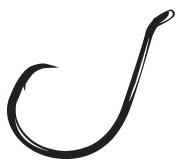
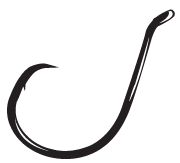
Use a small hook. A 1/0 or smaller is plenty for perch, and a big surf hook just tears the crab apart on the cast. Two small crabs on one hook is a normal presentation.
Cast gently. A crab is a soft bait and a full-power cast will fling it off. If you keep losing bait in the air, you're casting too hard rather than hooking wrong.
When is the best time to collect them?
A dropping tide, and the lower the better. As the water pulls back it exposes more of the band they live in, and you can work sand that was under three feet of water an hour ago.
Which is convenient, because a dropping tide is also when a lot of perch fishing turns on. Collect on the way down, fish through the run.
They're seasonal too. Numbers are highest through the warmer months and thin out in winter on a lot of beaches, which is when a bag of frozen bait earns its place in the cooler.
Do you need a license to collect sand crabs?
Take this one seriously rather than taking our word for it. California regulates the take of invertebrates, and the rules differ depending on where you are and whether you're on a public pier.
Check the current CDFW regulations before you fill a bucket. It's a two minute job and it's your responsibility, not ours.
Common questions
- What do sand crabs catch?
- Barred surfperch above all, which eat them as a staple. Corbina, croaker and a range of other surf species take them too. It's the closest thing to a default bait on a California beach.
- Do you need a sand crab rake?
- No. Your hands work fine and most people never buy one. A rake or a mesh scoop speeds things up if you're collecting for a group or working coarse sand.
- Can you freeze sand crabs?
- You can, and plenty of people do for the winter months. They're noticeably softer and less effective than live ones, so use fresh when you can get them.
- Why can't I find any sand crabs?
- You're probably looking in the wrong band or at the wrong tide. Work the wet sand where waves are actively draining, on a falling tide, and watch for the V ripples rather than digging at random.