Surf Fishing Rigs: The Two You Actually Need
How to tie the fish-finder rig and the high-low rig, and how to tell which one the conditions are asking for. Nearly every other surf rig is a variation on these two.
By Augustus Muse · Published August 25, 2026
There are dozens of surf rigs and almost all of them answer the same question: how do you keep a bait where the fish are, in water that's actively trying to move it somewhere else?
Two rigs answer it well enough that you can fish a beach for years and never tie a third. The difference is where the bait ends up. A fish-finder rig puts it flat on the sand, where anything rooting along the beach will find it. A high-low holds it up in the water column, where anything hunting by sight will. Neither is better. Knowing which to reach for is most of the skill.
What is a fish-finder rig and how do you tie one?
It's the sliding-sinker rig, sometimes called a Carolina rig. From the mainline down: slide a sinker slide or a plain snap swivel onto your line so it runs free, add a small bead to protect the knot, tie on a barrel swivel, then 18 to 30 inches of leader, then the hook. The weight hangs off the slide. The bait sits on the sand.
The name is the explanation. Because the sinker isn't tied into the line, a fish that picks up the bait and moves off pulls line through the slide instead of dragging a lump of lead. It feels almost nothing, so it doesn't drop the bait. On a rig with a fixed weight, a cautious fish feels four ounces of dead lead the second it turns, and lets go.
That's the whole argument, and it's why this rig outfishes everything else on an open beach. If you only ever learn one, learn this one.
Leader length is the part worth thinking about. Short, around 18 inches, pins the bait in the strike zone and casts cleanly. Long, out past 30 inches, lets it wash around and look alive, at the cost of tangles in the air. Start at 24 and adjust to what the water's doing.
Terminal Tackle
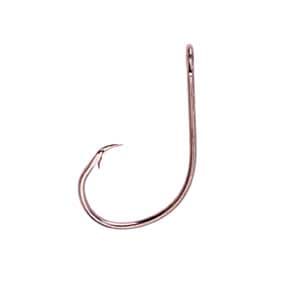
Eagle Claw Lazer Sharp Offset Circle Sea Hook — 4/0, 50-Pack
- Size
- 4/0
- Quantity
- 50 per pack
Line & Leader
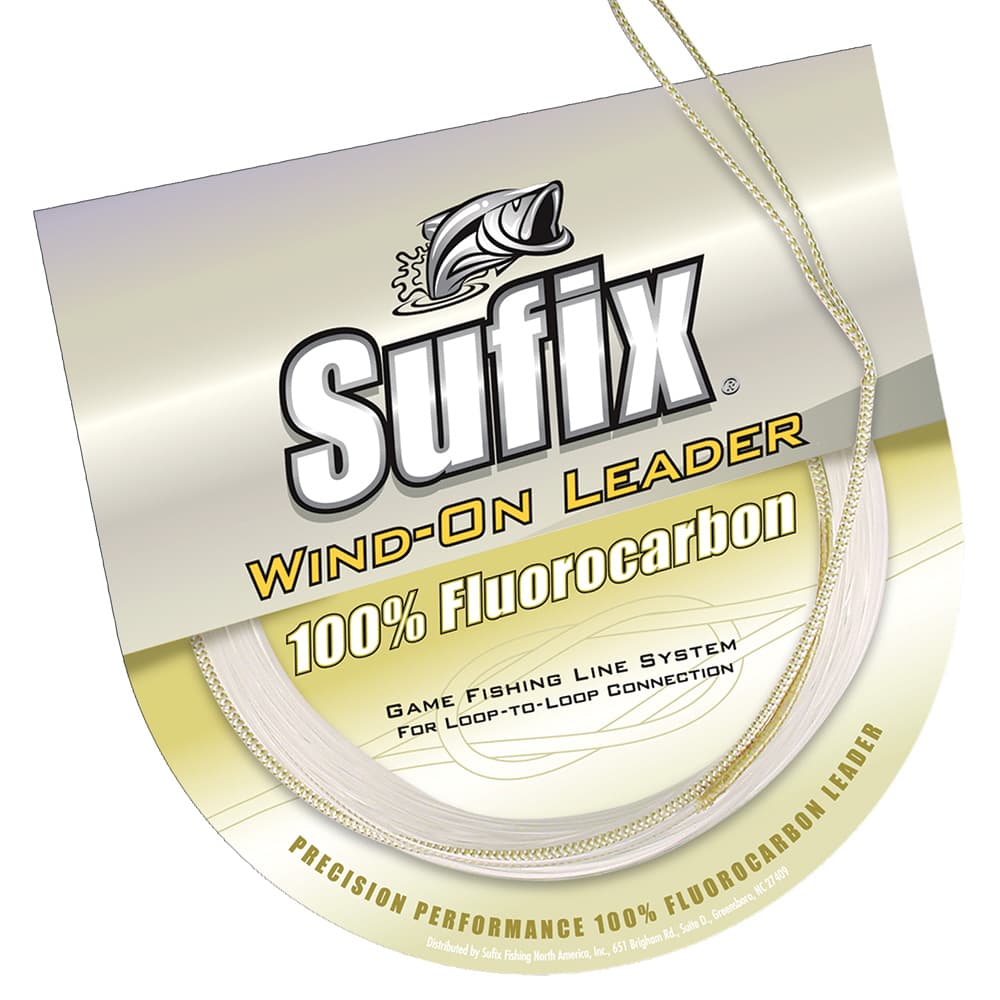
Sufix Wind-On Fluorocarbon Leader — 50 lb, 11 yd
Terminal Tackle
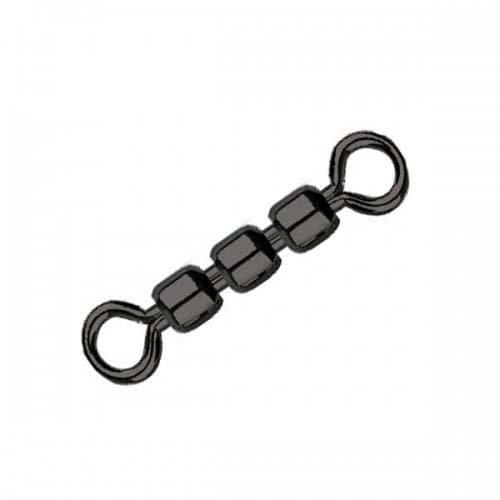
Mustad High-Speed Multi-Link Swivel — Size 2/0, 4-Pack, 72 lb
- Size
- 2/0
- Quantity
- 4
Rides along in a bigger order
What is a high-low rig and when should you use it?
Two dropper loops tied into a length of leader, a hook on each, sinker on the bottom. The baits stand off the line on short droppers, a few inches to a foot above the sand.
Reach for it when the bottom is doing something you don't want your bait sitting in. Heavy weed. Soft mud that'll bury it. Crab so thick that anything on the sand gets stripped in ninety seconds. It's also the better prospecting rig, because two hooks means two baits at two heights, and that tells you where the fish are feeding twice as fast.
The cost is that the sinker's fixed, so a fish feels the weight. That matters less with aggressive fish and a lot with cautious ones, which is why the fish-finder is still the default.
Which surf rig should you use, and when?
| Conditions | Rig | Why |
|---|---|---|
| Clean sand, fish feeding on the bottom | Fish-finder | Bait sits where they're looking, and they feel nothing when they take it |
| Weed, mud, or heavy crab | High-low | Holds the bait up out of the mess |
| A beach you don't know yet | High-low | Two baits at two depths is a faster survey |
| Cautious or heavily fished water | Fish-finder | The sliding weight is your only real defence against a dropped bait |
| Hard current, everything on the move | Fish-finder, short leader | Less line in the water for the current to push around |
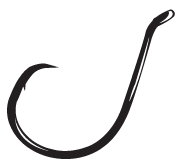
Why circle hooks, and how do you set them?
Both rigs above get fished with the rod in a holder while you wait, and that's exactly what a circle hook is built for. It doesn't need a hookset. As the fish moves off, the hook slides to the corner of the jaw and turns, and the fish sets it against its own weight.
So don't strike. If you swing on a circle hook the way you would a J hook, you'll pull it straight back out of its mouth. Let the rod load up, then wind steadily until it comes tight. It's the hardest habit for an experienced angler to break and the easiest thing in the world for someone who was never taught the other way.
The practical payoff is that circle hooks catch in the jaw instead of the gut, so a fish you didn't mean to keep goes back with a real chance. Some fisheries require them. Check your own rules rather than taking our word for it.
What knots do you need for surf fishing?
Three, and that's it. An FG knot or a double uni to join braid to leader. A uni or a loop-to-loop to attach the leader to your swivel. And a snell or a uni for the hook, though the snell is worth learning for circle hooks specifically, because it presents the hook at a better angle for the way a circle works.
Tie them at home, in good light, with dry hands, until you don't have to think. Then tie them on a dark beach with cold hands, because that's the only test that counts.
Common questions
- Do I need a shock leader on a surf rig?
- Only if you're casting heavy lead. The old surfcasting rule is roughly 10 lb of shock leader per ounce of lead, so 3 oz wants about 30 lb. Under 3 oz on a rod rated for it, your rig leader is already doing that job.
- Is mono or fluorocarbon better for a surf leader?
- Fluorocarbon is harder to see and takes more abrasion, and both matter over clear water and shell. Mono is cheaper and floats a touch, which holds a bait slightly higher. The gap is small enough that the honest answer is to use whichever you already own.
- How long should a surf fishing leader be?
- Start at 24 inches on a fish-finder rig. Shorten it in hard current or heavy weed, lengthen it in calm clear water where you want the bait moving naturally.