How to Pick a Landing Net
Hoop size, handle length, mesh type and why a pier needs a different net from a boat. Plus when a gripper or a gaff is the better tool.
By Augustus Muse · Published November 4, 2026
The fish you lose at the net are the ones you remember. A net that's too small, too short or that tangles every hook on the lure costs more fish than a bad knot does.
Three decisions: how big a hoop, how long a handle, and what the mesh is made of. In that order.
What size landing net do you need?
Bigger than you think, within reason. The hoop has to take the fish head-first with room to spare, because a fish that touches the rim on the way in bolts. For surfperch, bass and anything under a few pounds, a hoop around sixteen inches is plenty. For halibut, stripers and anything you'd call a good fish, go to twenty inches or more, and make sure the bag is deep enough that the fish can't flip out over the top.
The limit is what you can carry. A big hoop on a long handle is awkward on a crowded pier and a liability in a kayak, which is where the folding nets earn their place.
How long should the handle be?
This is the one people get wrong, and it depends entirely on how far you are above the water.
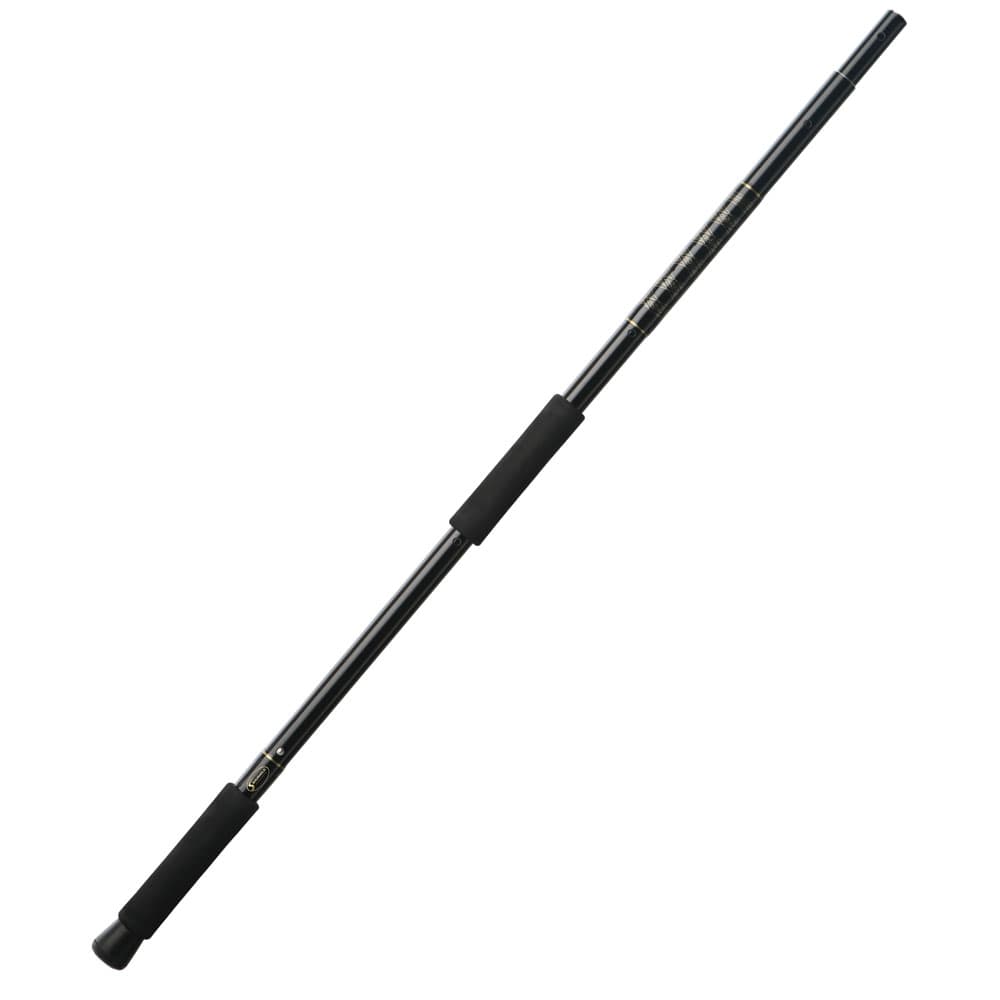
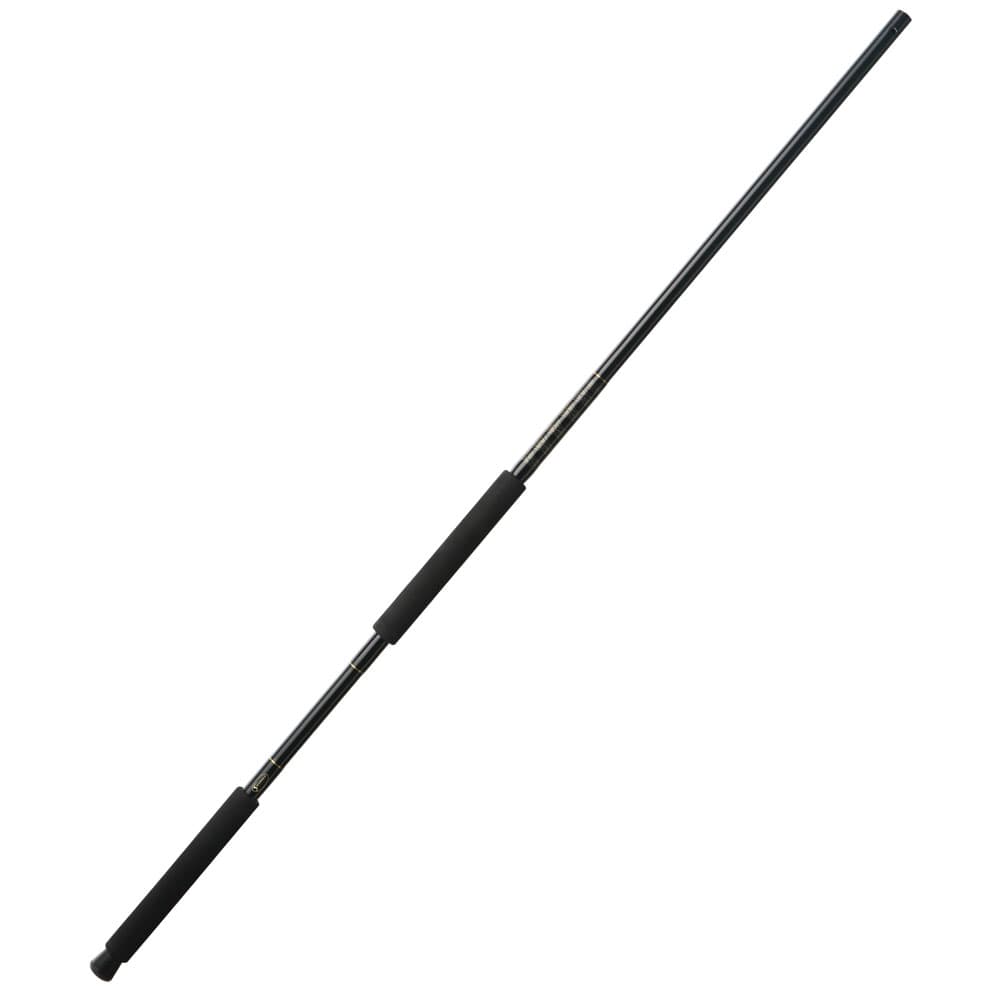
Wading or on a beach, the water's at your feet and a short fixed handle is all you want. In a boat, three to four feet reaches over the gunwale. On a pier, a jetty or a high bank, you can be six feet or more above the surface, and no handle a person can swing reaches that. That's what telescoping handles are for: compact to carry, extended to reach.
A fixed handle is stronger than a telescoping one at the same length, because there's no joint to slip under load. If you always fish the same height, fixed is the better buy.
Rubber, knotless or knotted mesh?
We stock knotless nets. We don't currently stock a rubber-mesh net, and if you fish treble-hook lures and release most of what you catch, a rubber net is worth buying elsewhere. It's the single biggest reduction in time spent untangling a lure from a net bag.
| Mesh | On the fish | With hooks | Weight and drag | Buy it if |
|---|---|---|---|---|
| Rubber | Kindest, doesn't strip slime | Trebles mostly don't catch | Heaviest, most drag in the water | You release fish or throw lures with trebles |
| Knotless nylon | Good, far gentler than knotted | Catches hooks less than knotted | Light | General use, a sensible default |
| Knotted nylon | Roughest on fish | Catches everything | Lightest, cheapest | You're keeping what you net and fishing bait |
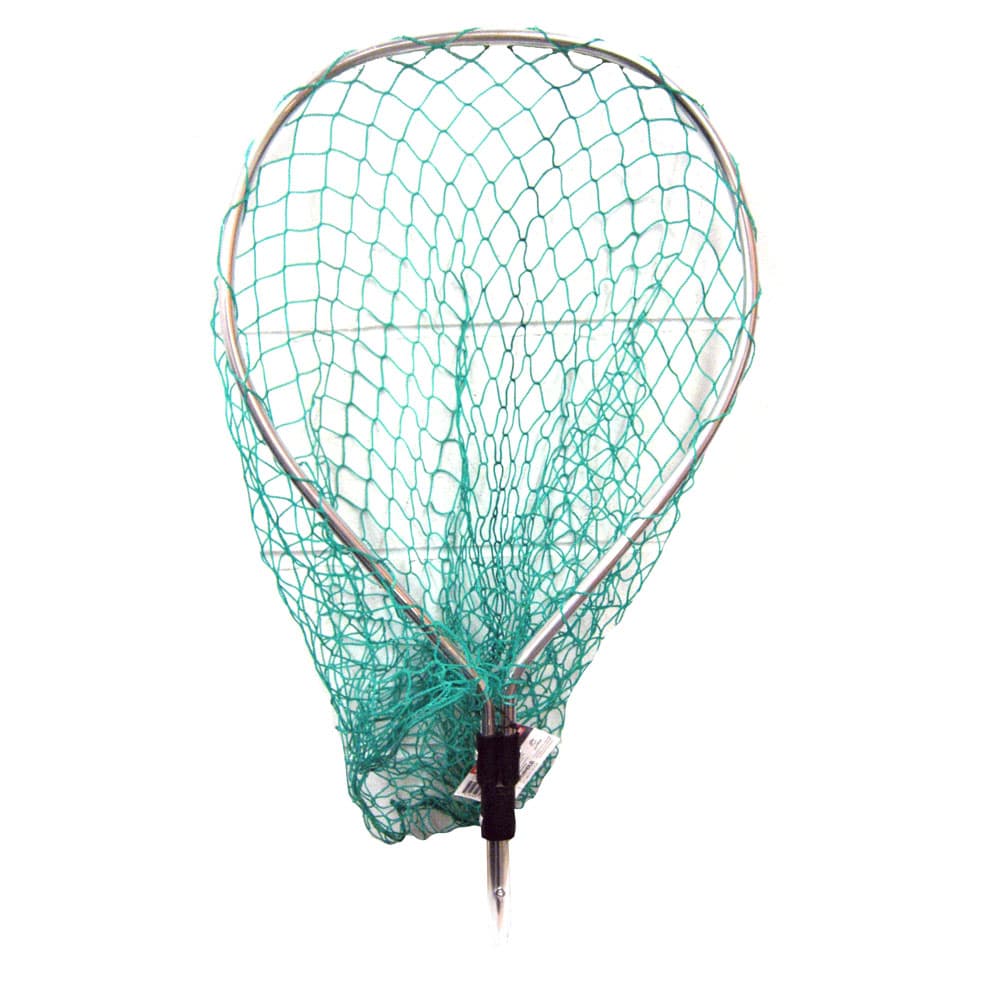
Why would you want a net on a quick-release handle?
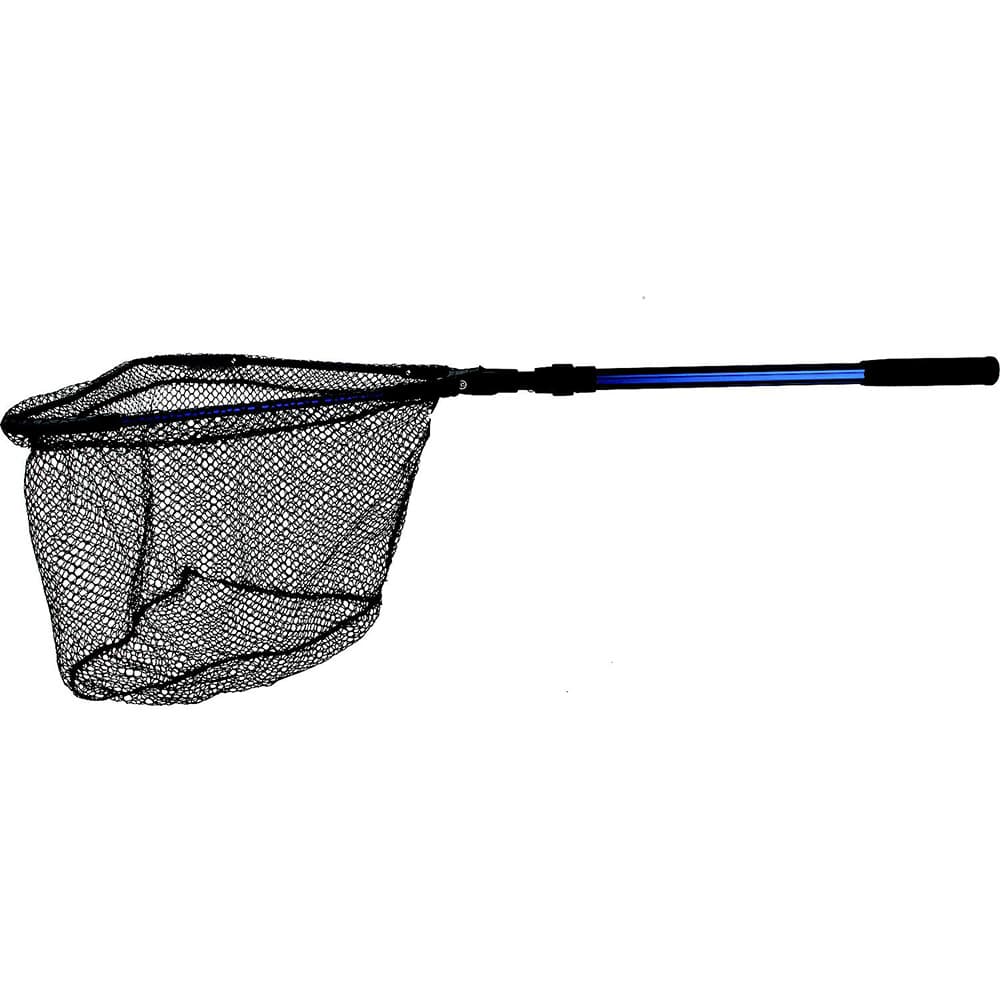
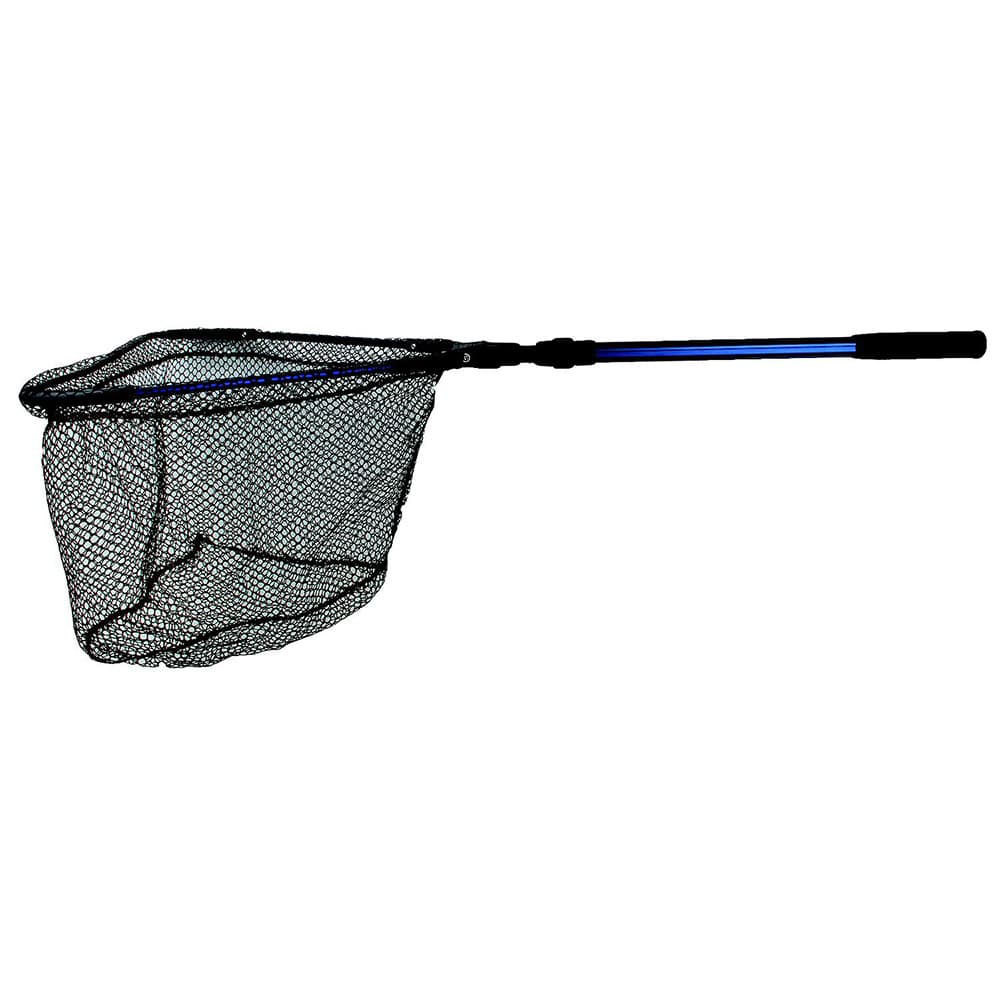
One handle, several heads. A landing net for fish, a fine-mesh dip net for shrimp and bait, a crab net, a gaff for a fish you're keeping that's past the size a net manages well. The head clips on and off in a second, so the long handle you paid for does every job instead of one.
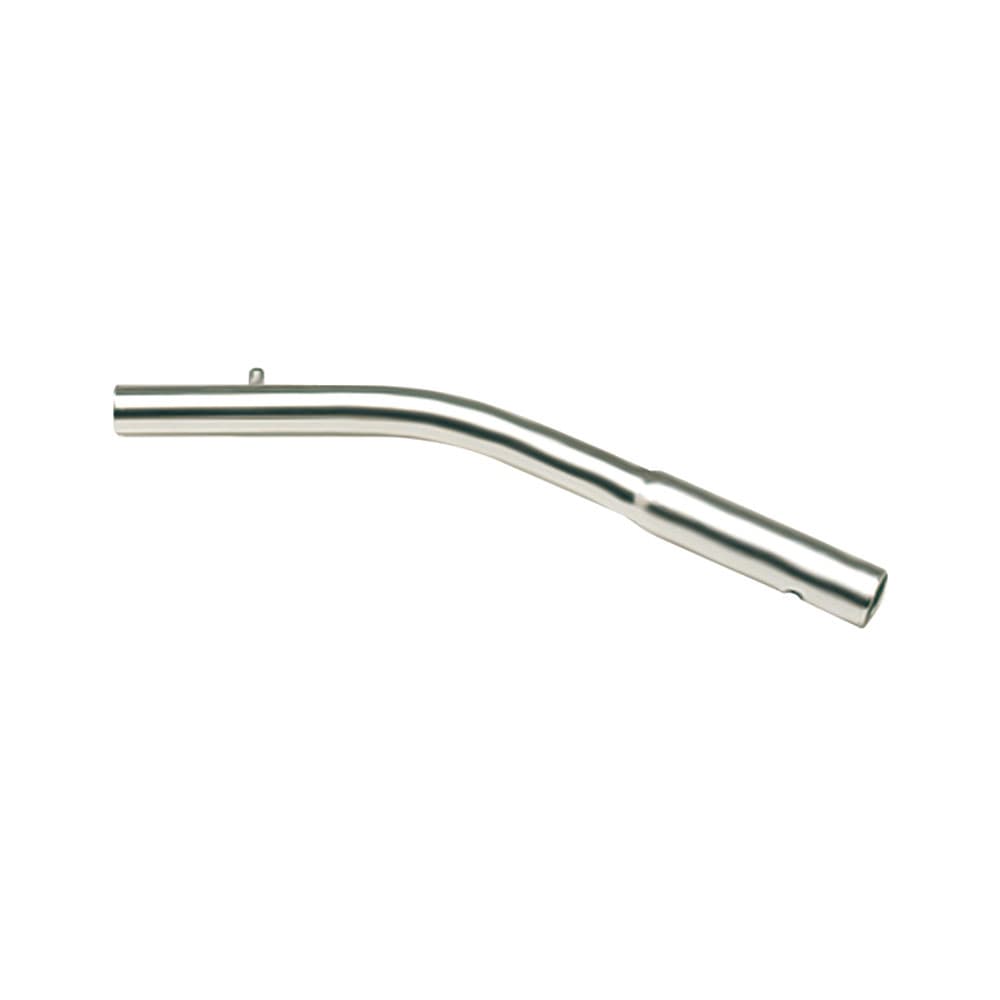
A curved adapter between handle and head is the fussy-sounding extra that turns out to matter: it puts the hoop in front of the fish rather than in line with a straight pole, which is the difference between scooping and chasing.
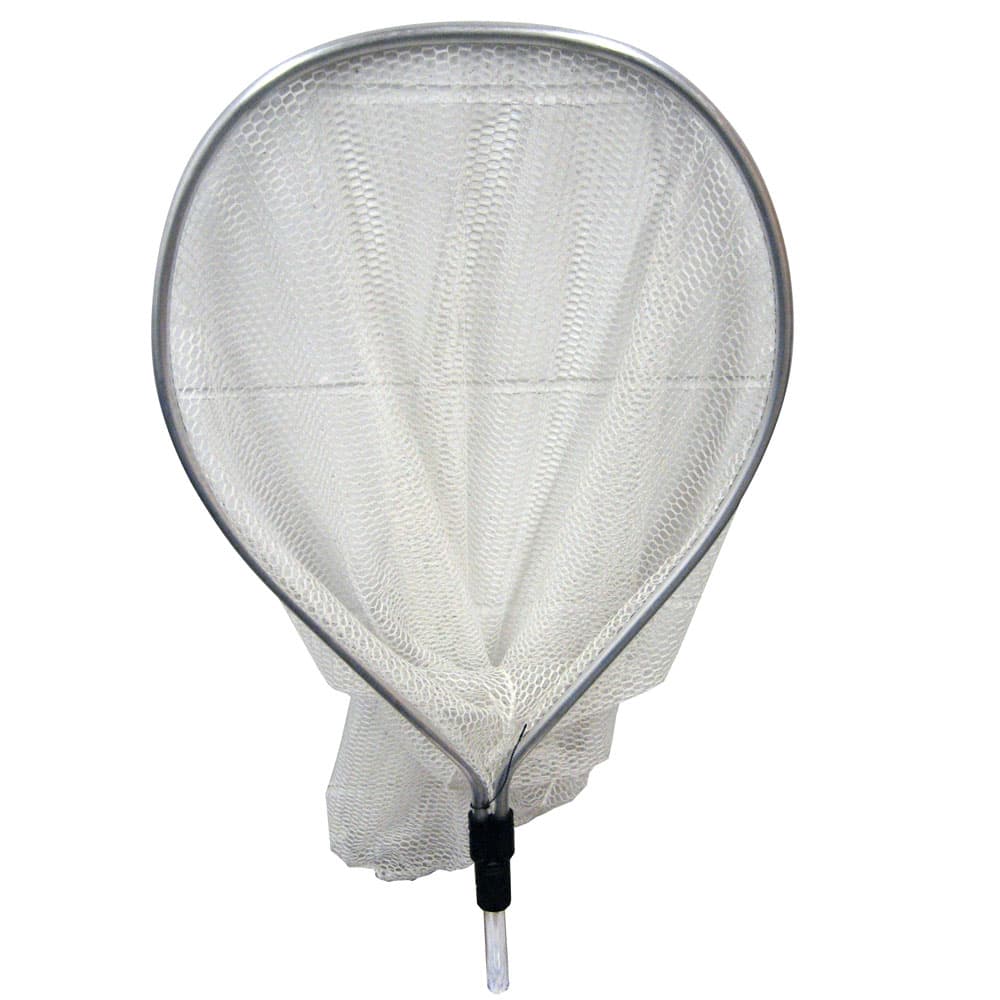
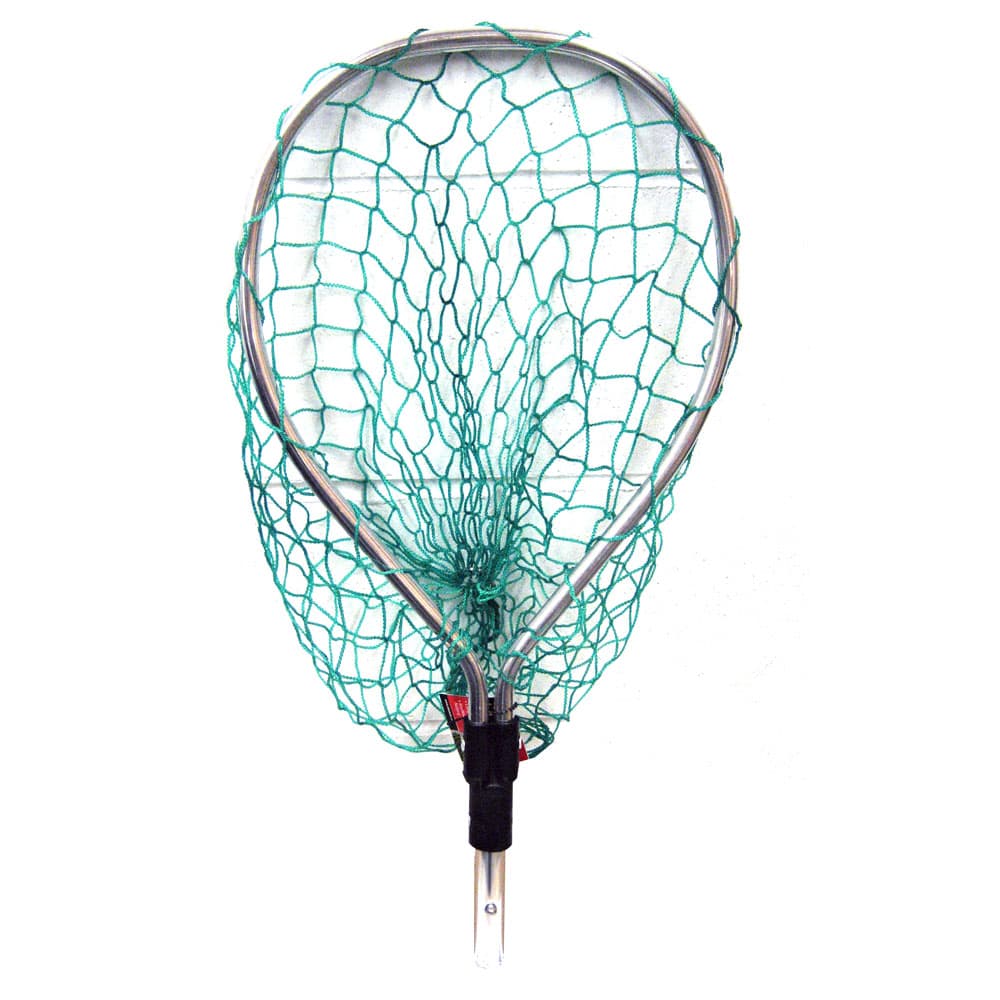
How do you actually net a fish?
Head first, always. A fish swims forward, so a net presented in front of it has the fish swim in; a net chased from behind has the fish swim away, and a tail touched by mesh gets a fresh burst of energy.
Put the net in the water and hold it still. Lead the fish over it with the rod, then lift. Stabbing at a fish with a net is how you knock it off the hook.
Don't net a green fish. Let it tire. A fish that's still running when it sees the net will find a way past it, and a big one can break a light hoop.
When is a gripper or a gaff better than a net?
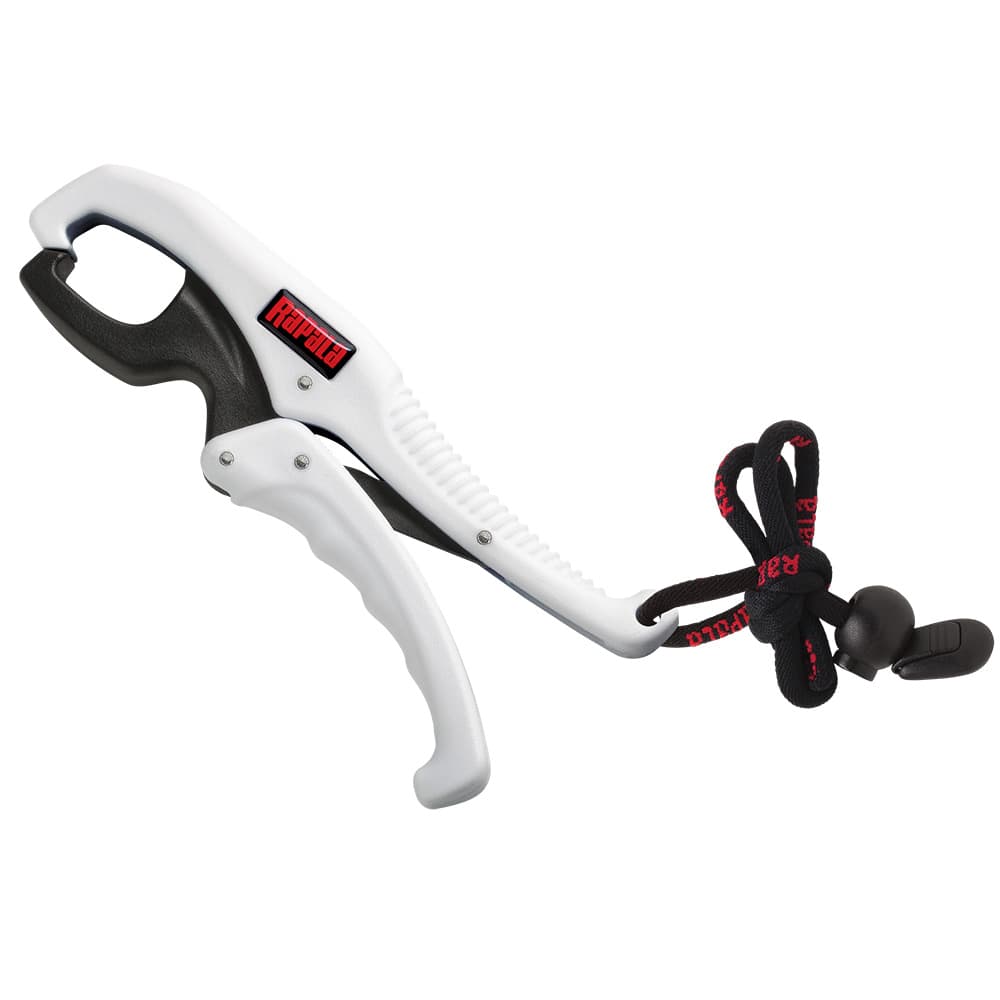
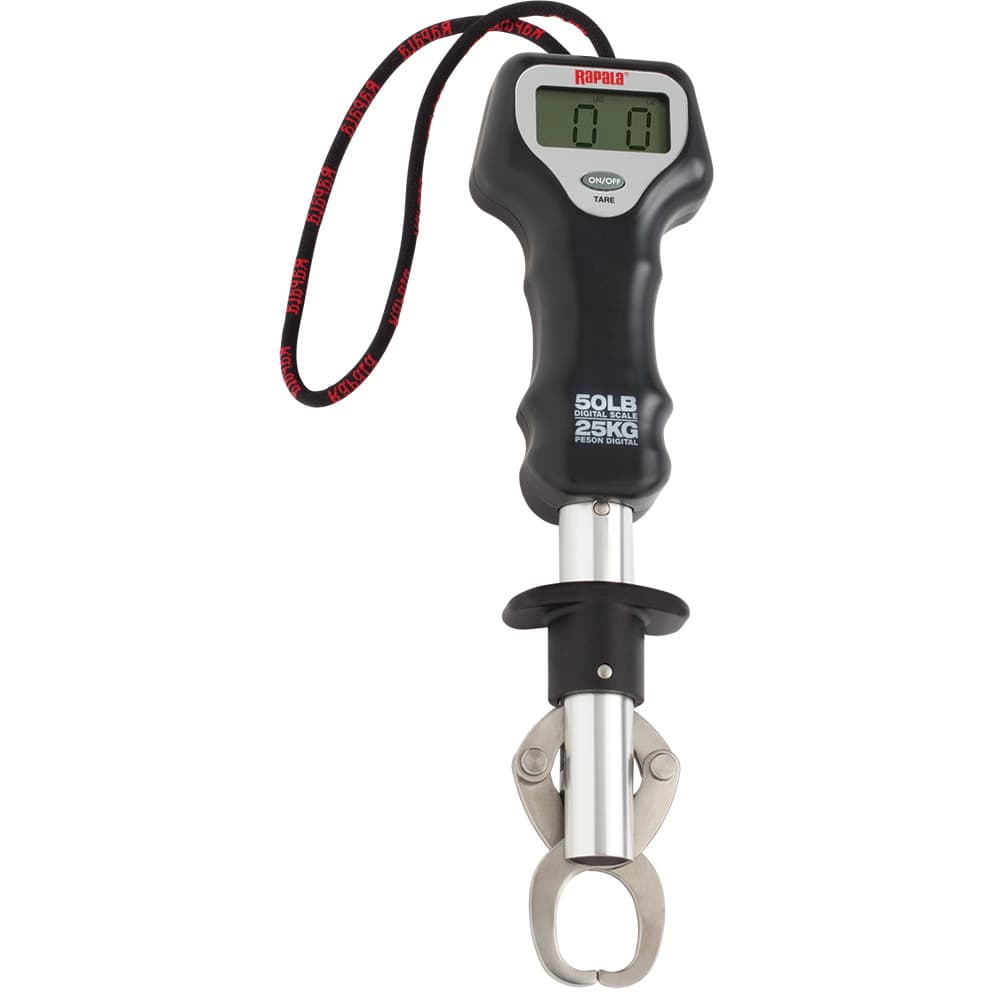
A lip gripper is the better tool for anything you want to control without a net bag: a toothy fish, a fish covered in hooks, or a fish you're weighing and releasing. It's also the only practical option in a kayak where a net has nowhere to go. One that floats is the one to buy.
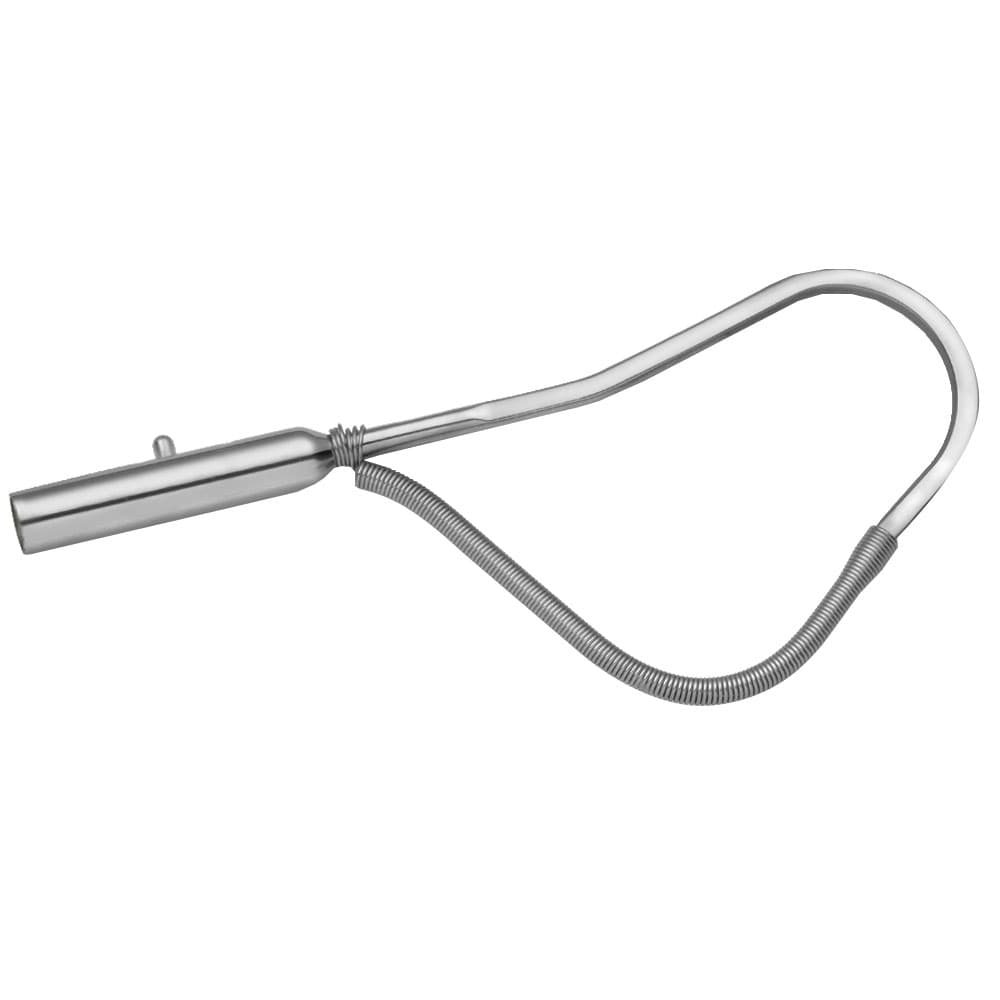
A gaff is for a fish you are keeping, that is too big or too strong for the net. It is not a release tool. If you mostly let fish go, you don't need one.
Common questions
- Can you land a fish from a pier without a net?
- Small ones, by lifting. Anything with weight will tear the hook out or snap the line on the way up. A long-handled net, or a drop net on a rope for high piers, is the answer. We don't stock drop nets.
- Does net mesh hurt fish?
- Knotted nylon does, by stripping the slime coat and splitting fins. Knotless is much better and rubber is best. If you release most fish, mesh type matters more than hoop size.
- How do I stop lures tangling in the net?
- Rubber mesh, mostly. Failing that, net the fish head first so the lure is inside the bag rather than dragged through it, and keep the bag taut rather than letting it billow.